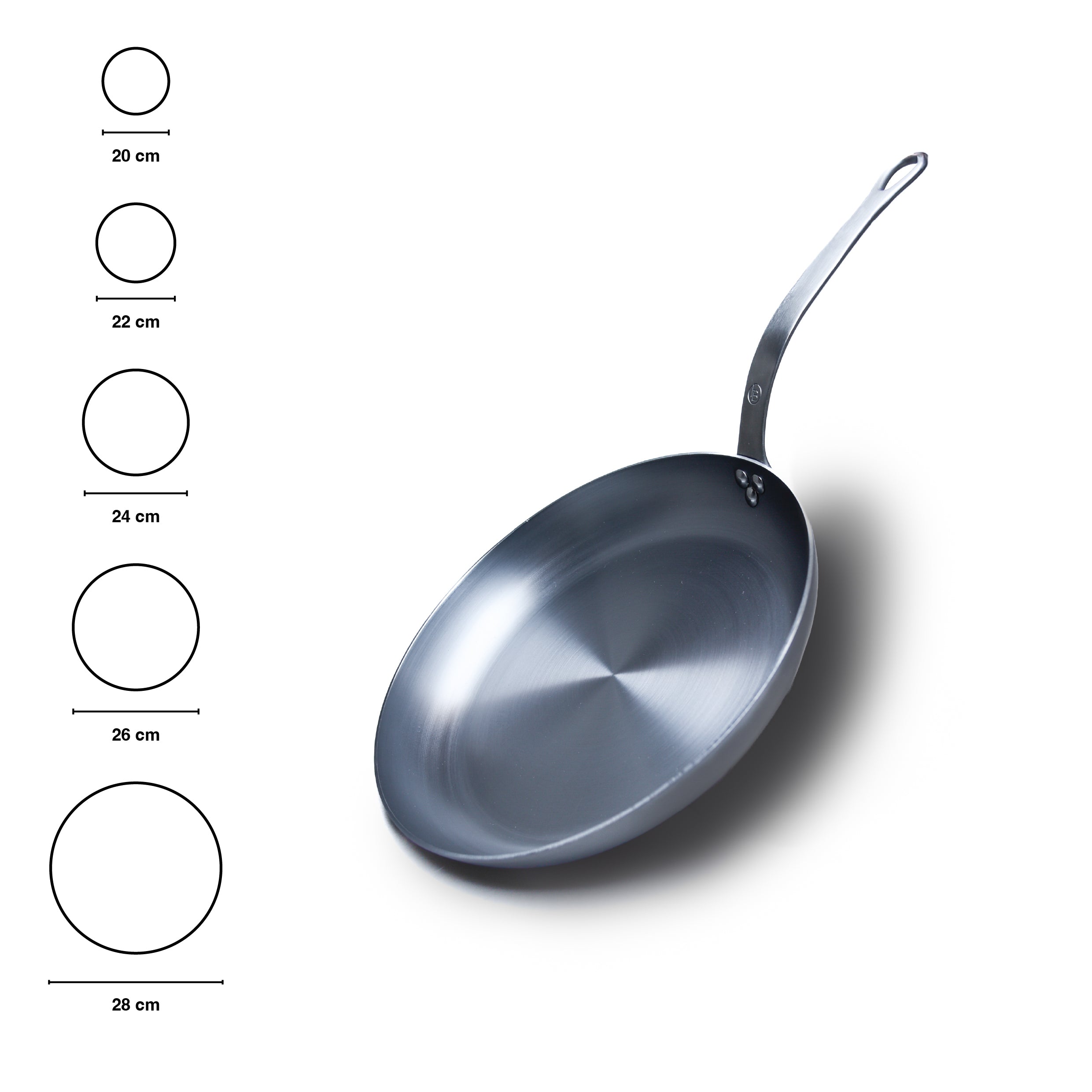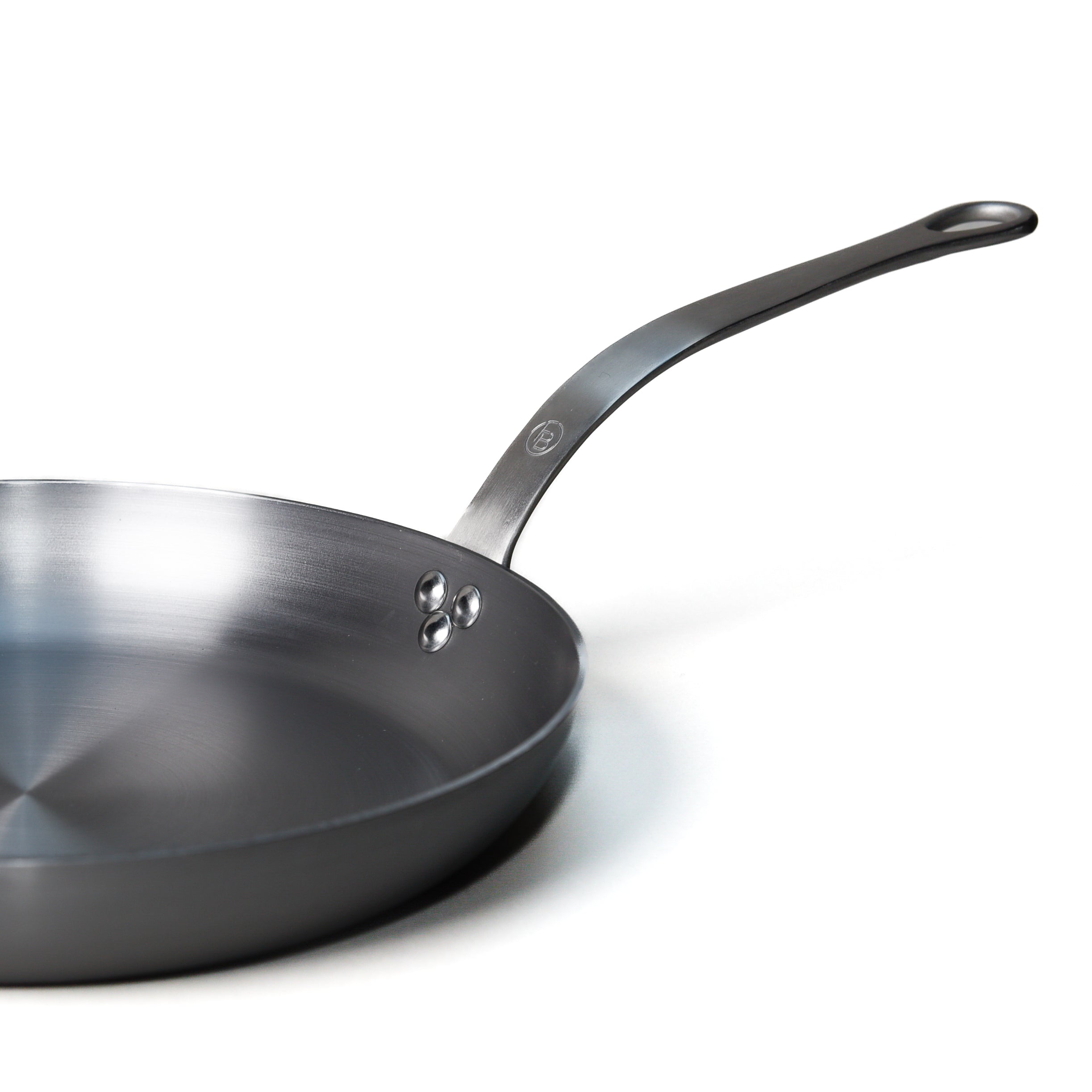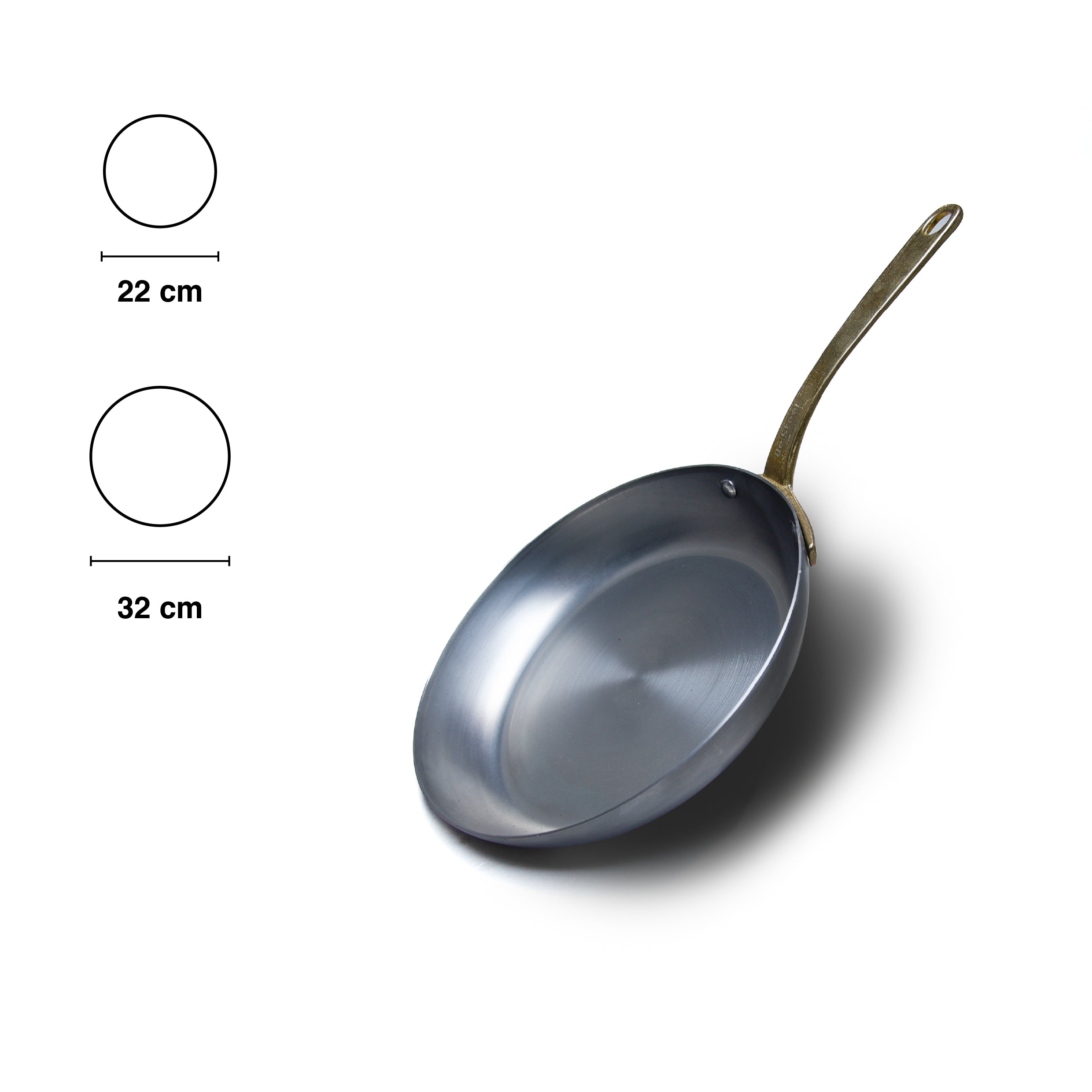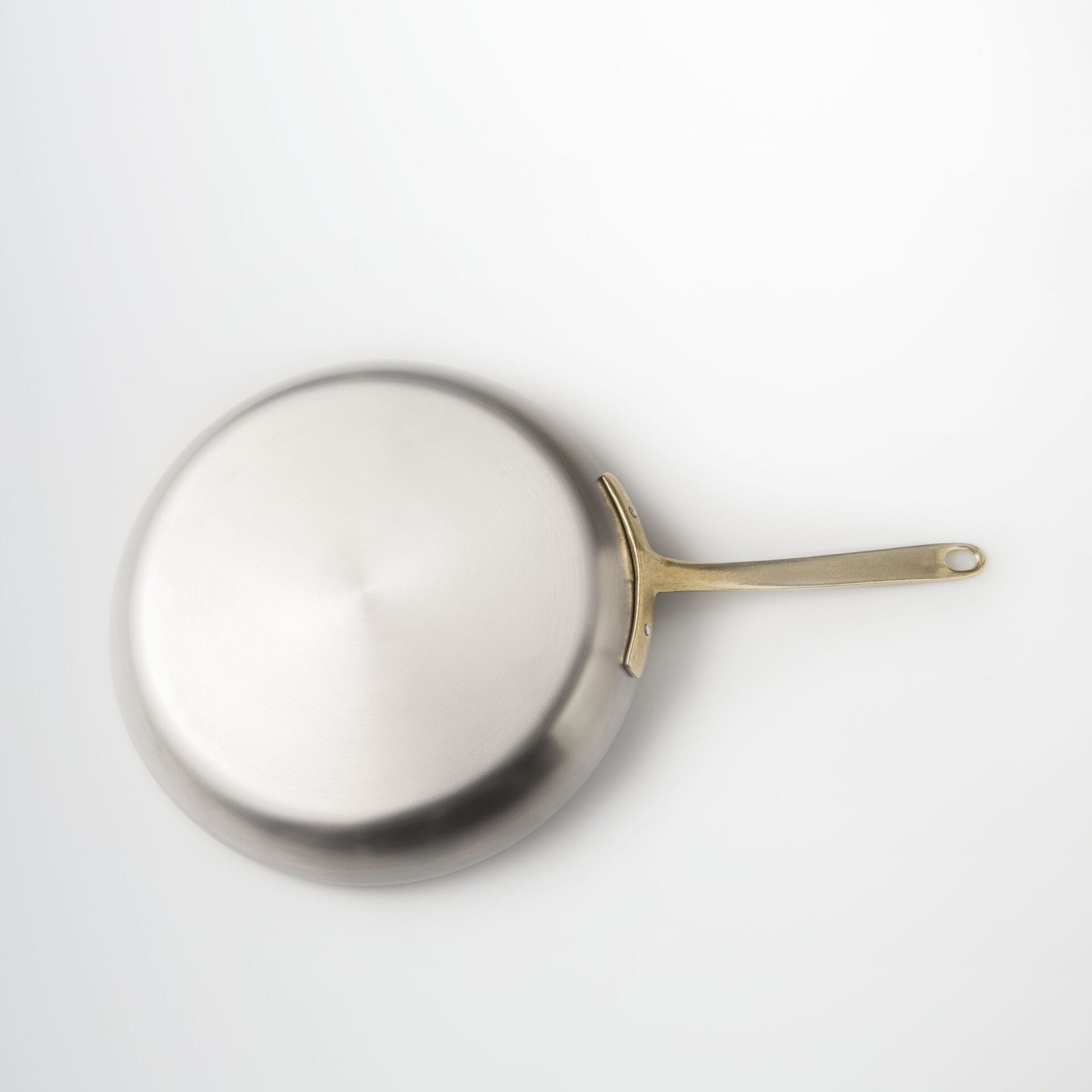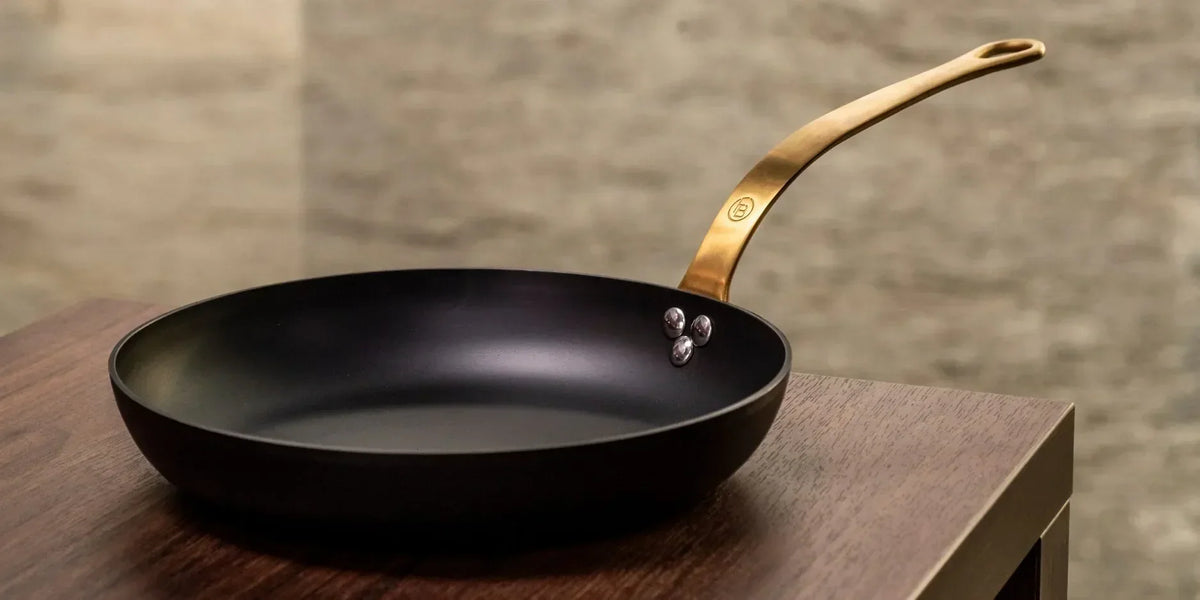
PRIMA E DOPO
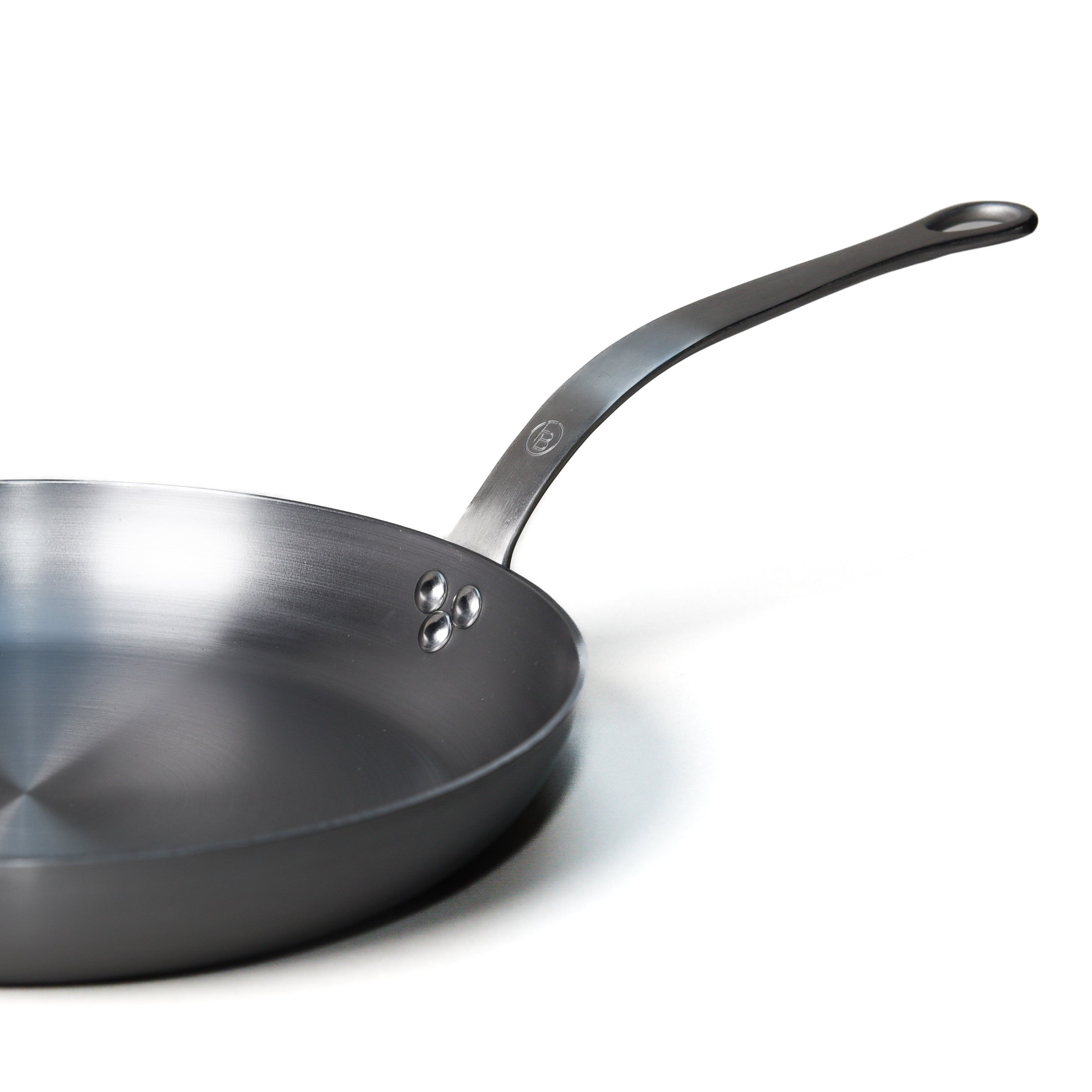
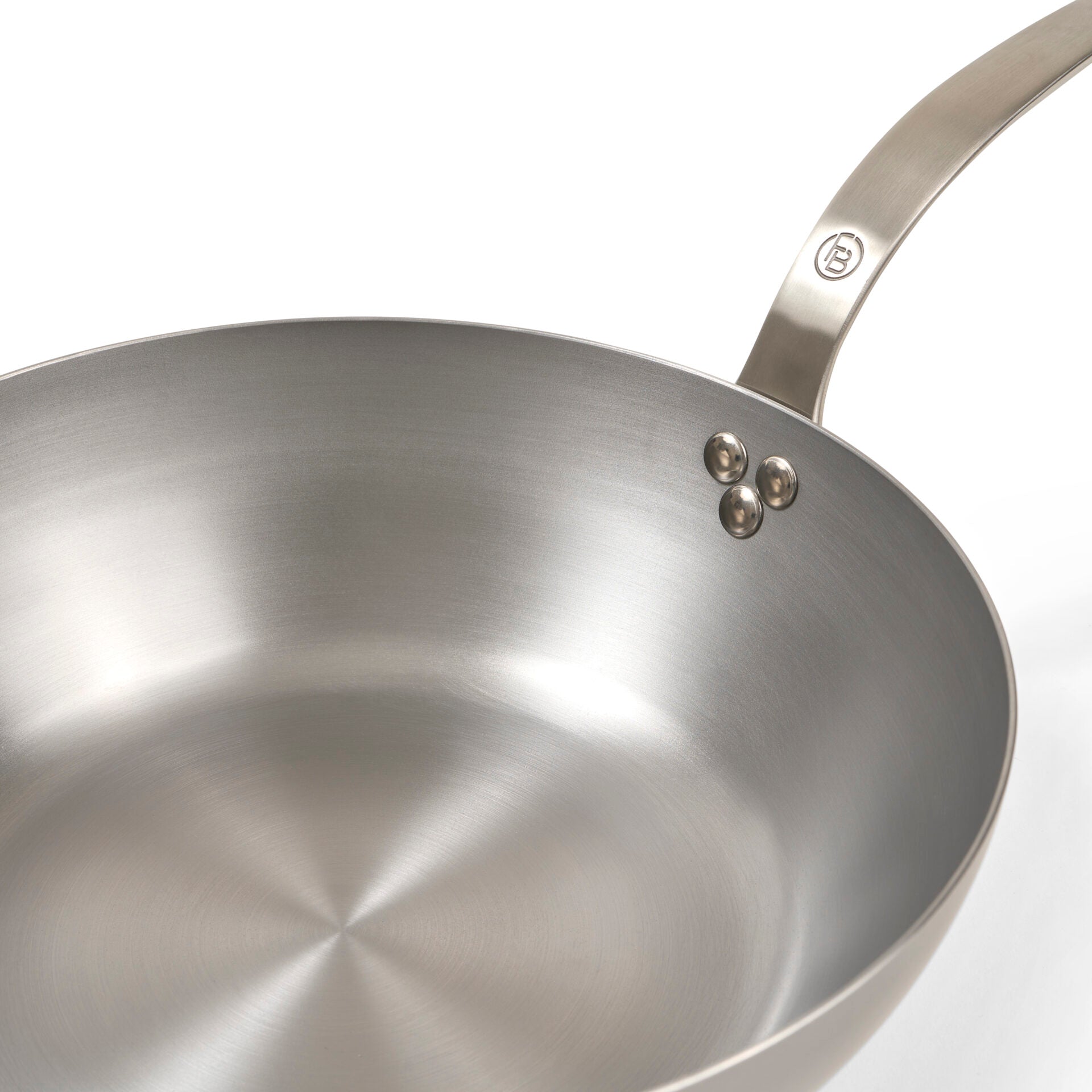
Ecco come ti arriva e come dovrebbe diventare la tua padella dopo la stagionatura.
Man mano che verrà utilizzata il colore acquisirà intensità.
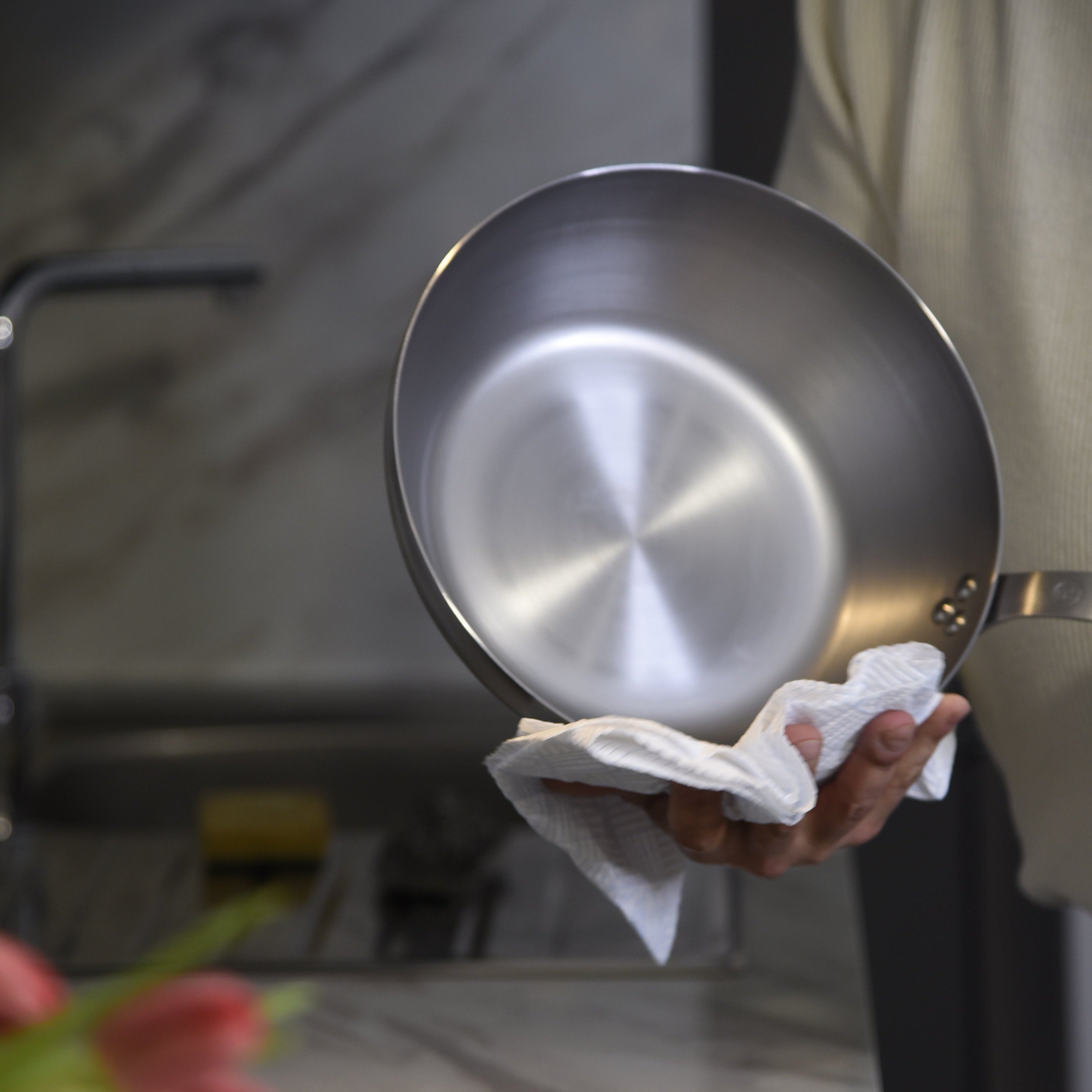
Prima del trattamento
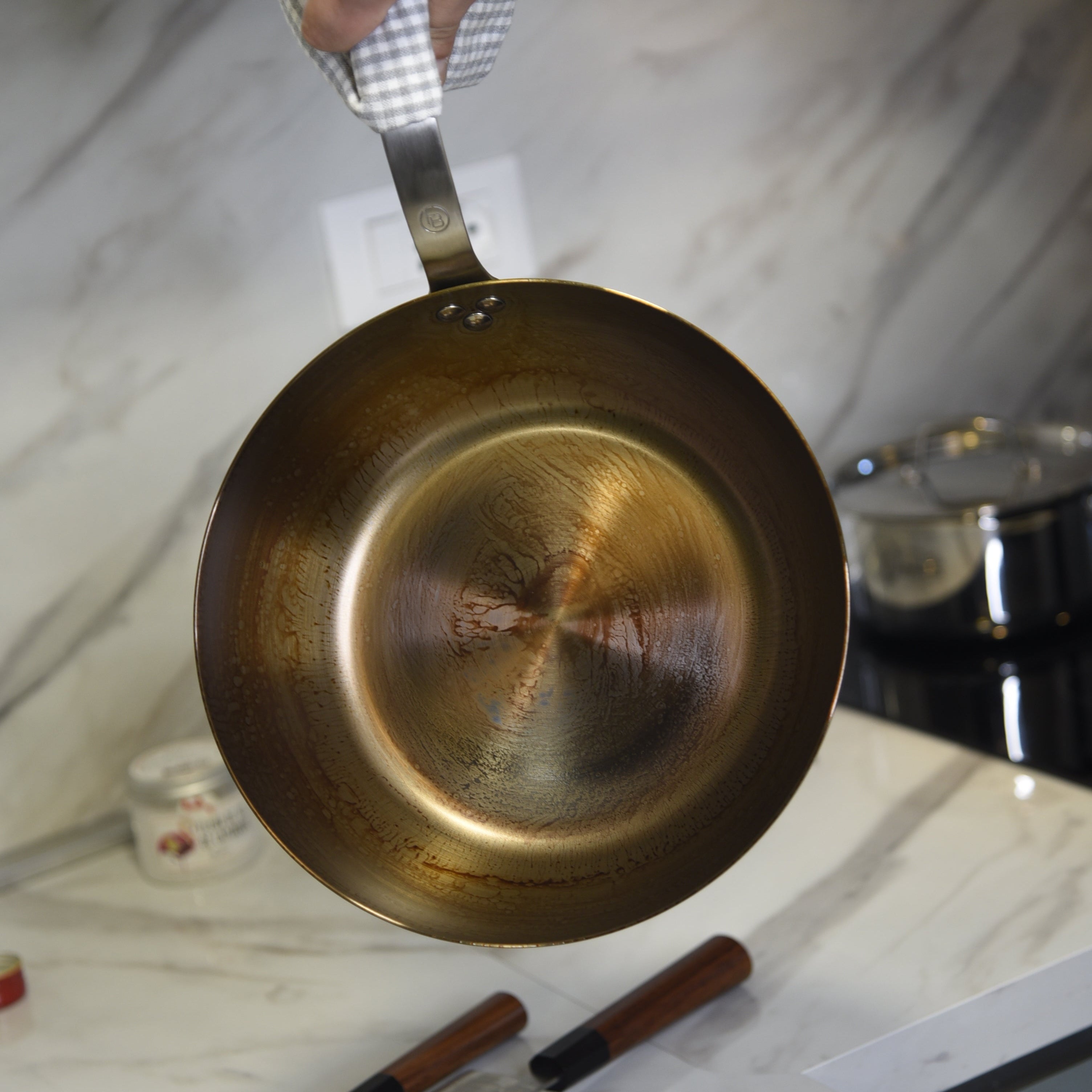
Dopo la sagionatura
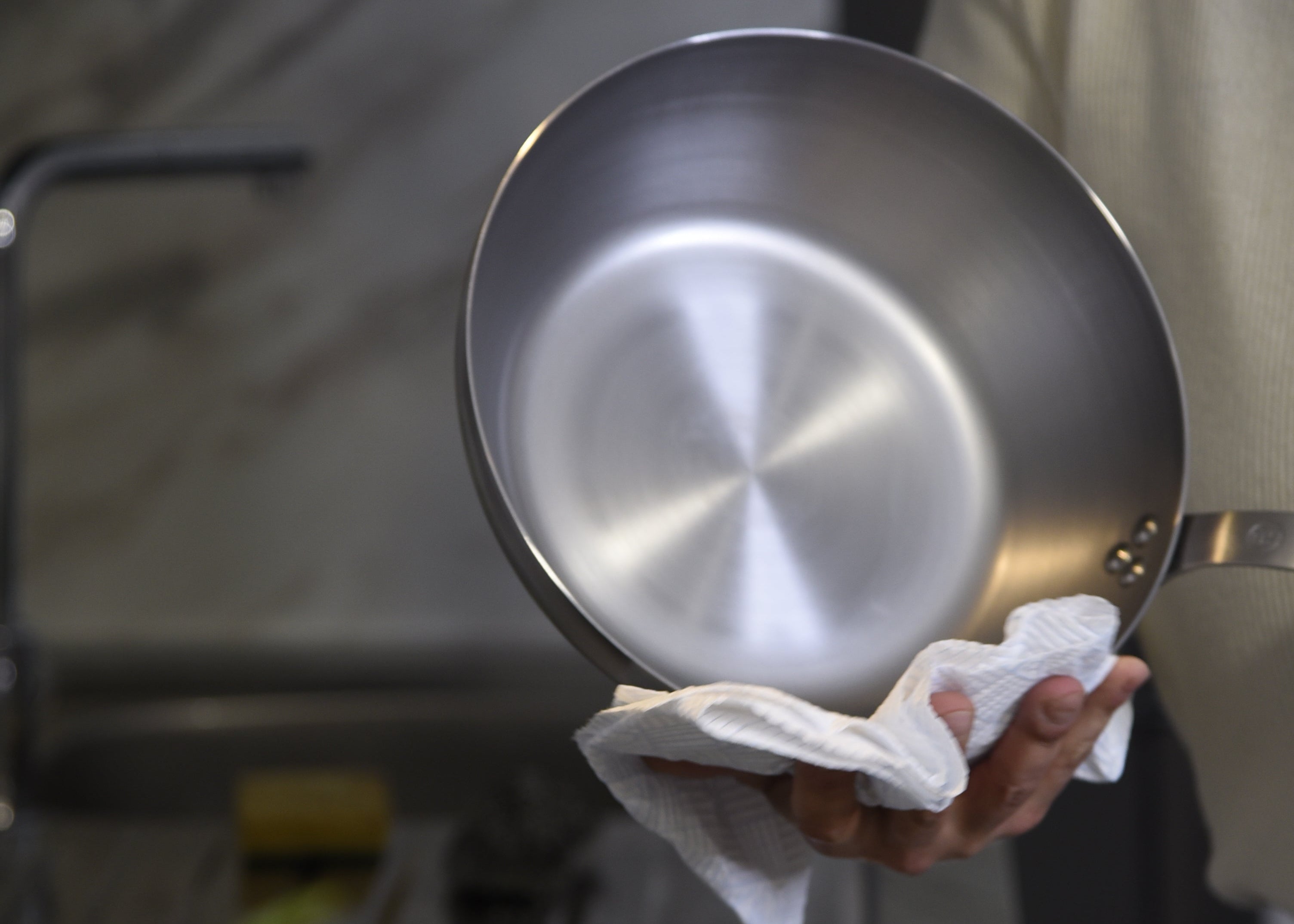
Pulizia iniziale
Lava la padella con acqua tiepida ed un sapone non troppo agressivo, asciugala accuratamente.
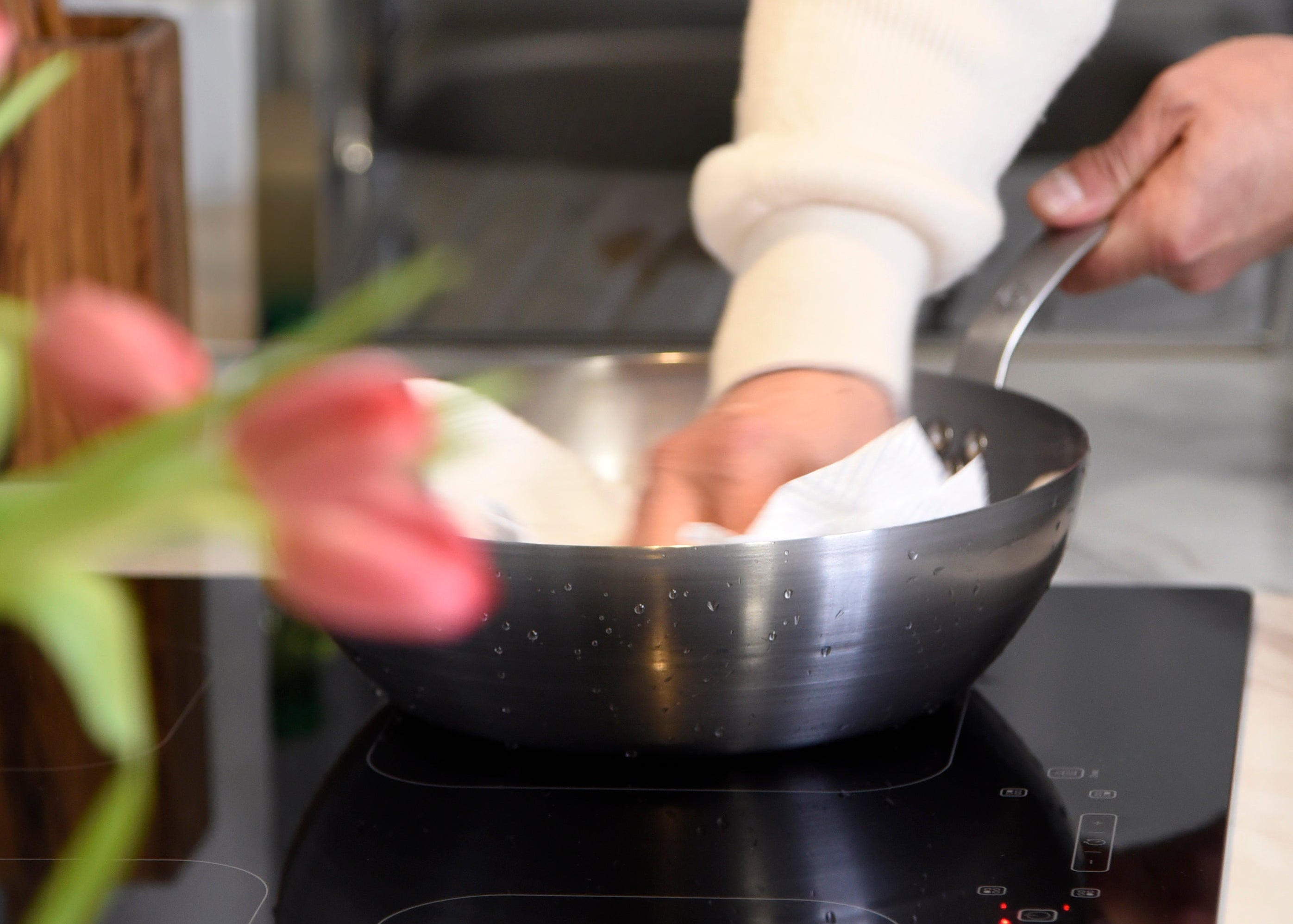
Applicazione dell’olio
Usa olio vegetale (semi di lino o girasole, olio d’oliva), spalmandolo uniformemente sulla superficie, anche sui bordi e sulla superficie esterna.
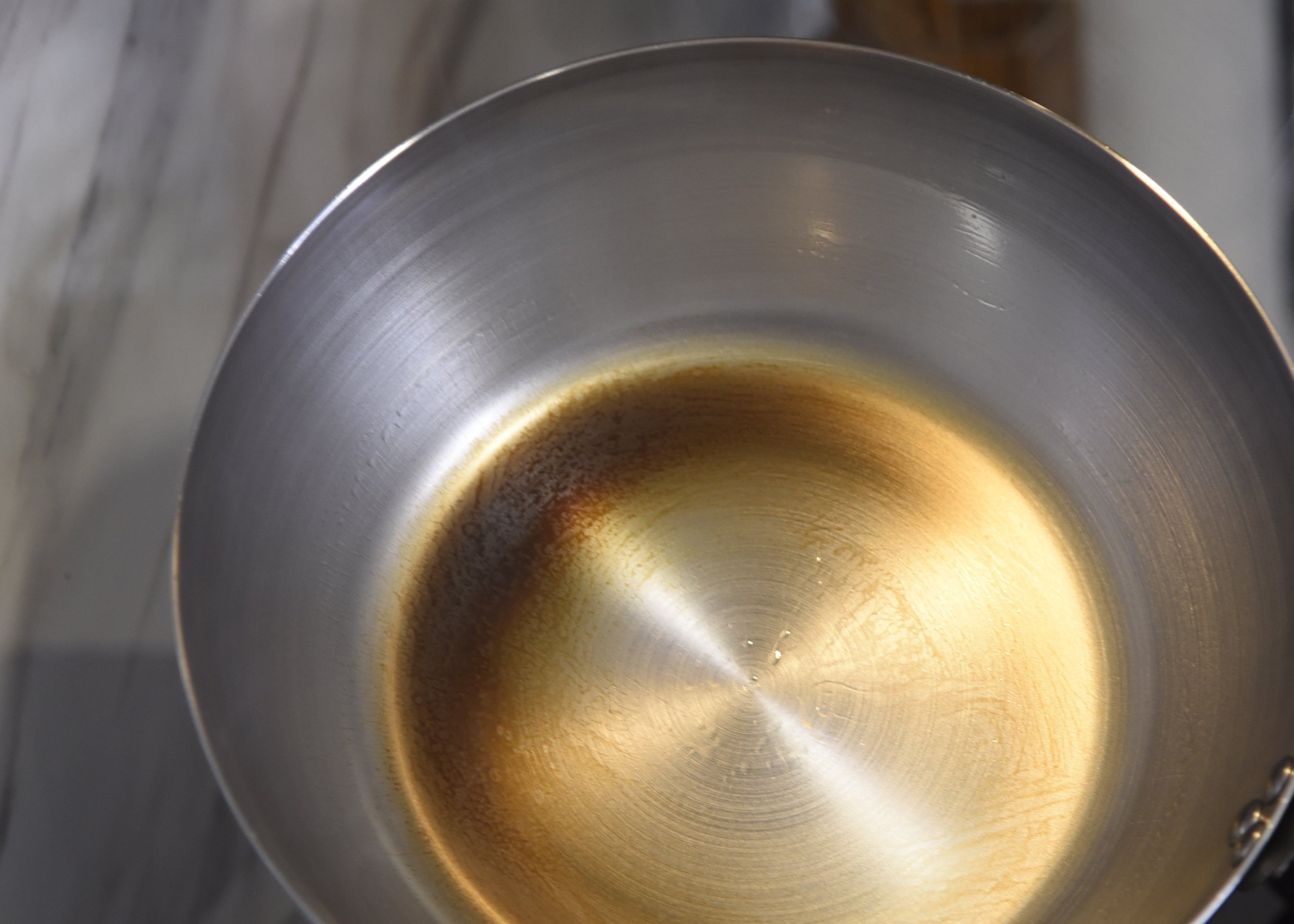
Riscaldamento
Scalda la padella a fuoco medio-alto fino a farla fumare. L'olio inizierà a polimerizzare: è normale, è esattamente quello che vuoi. Continua finché la superficie diventa scura, quasi nera — a quel punto la stagionatura è completa. Lascia raffreddare naturalmente.
Per una stagionatura più uniforme puoi usare il forno a 220–250°C per 20 min, con la padella capovolta. Ripeti il processo 2–3 volte per costruire uno strato antiaderente solido e duraturo.
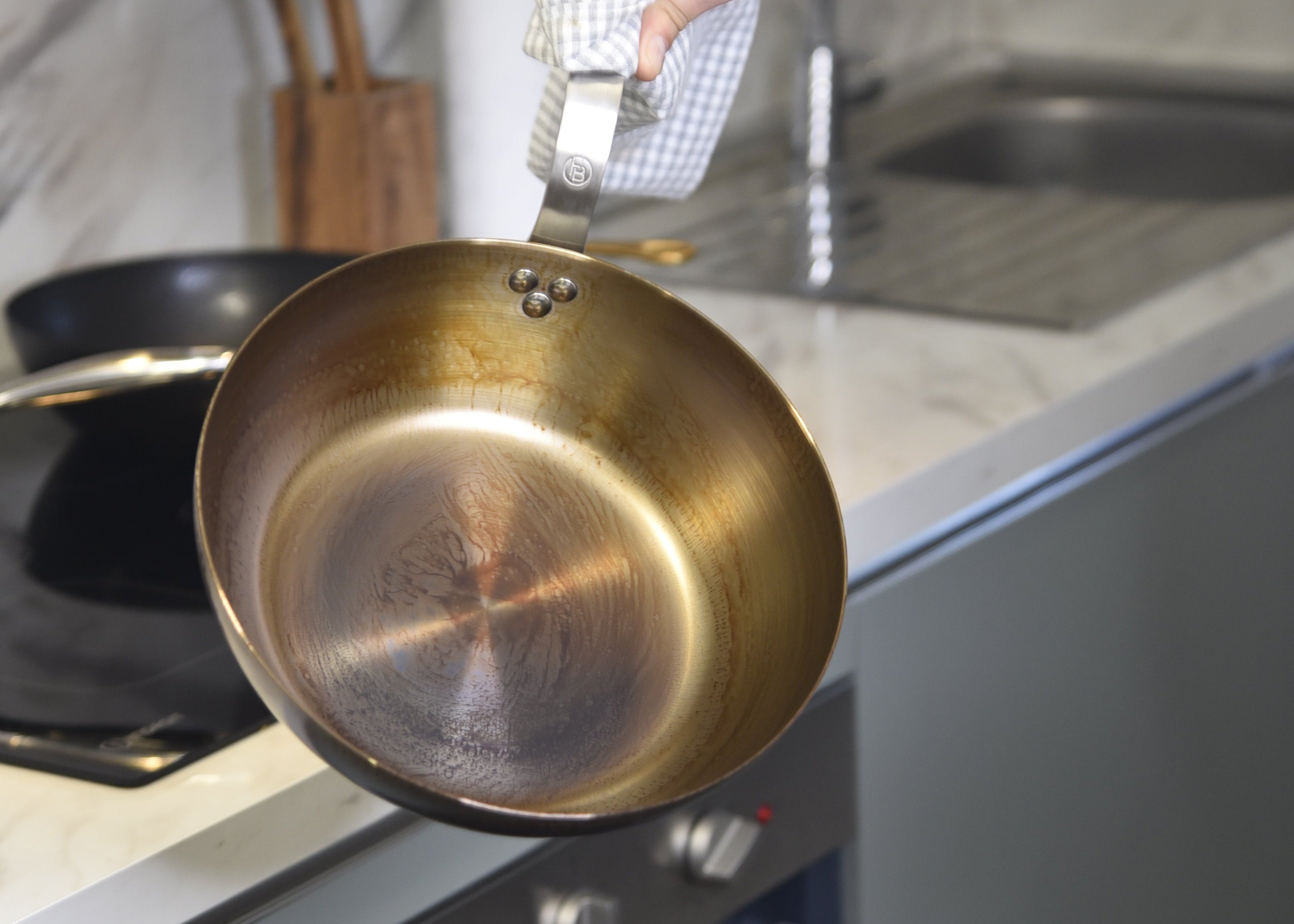
Pulizia
Passa delicatamente alcuni strati di carta assorbente sulla superficie per rimuovere l’olio bruciato.
Manutenzione seguente
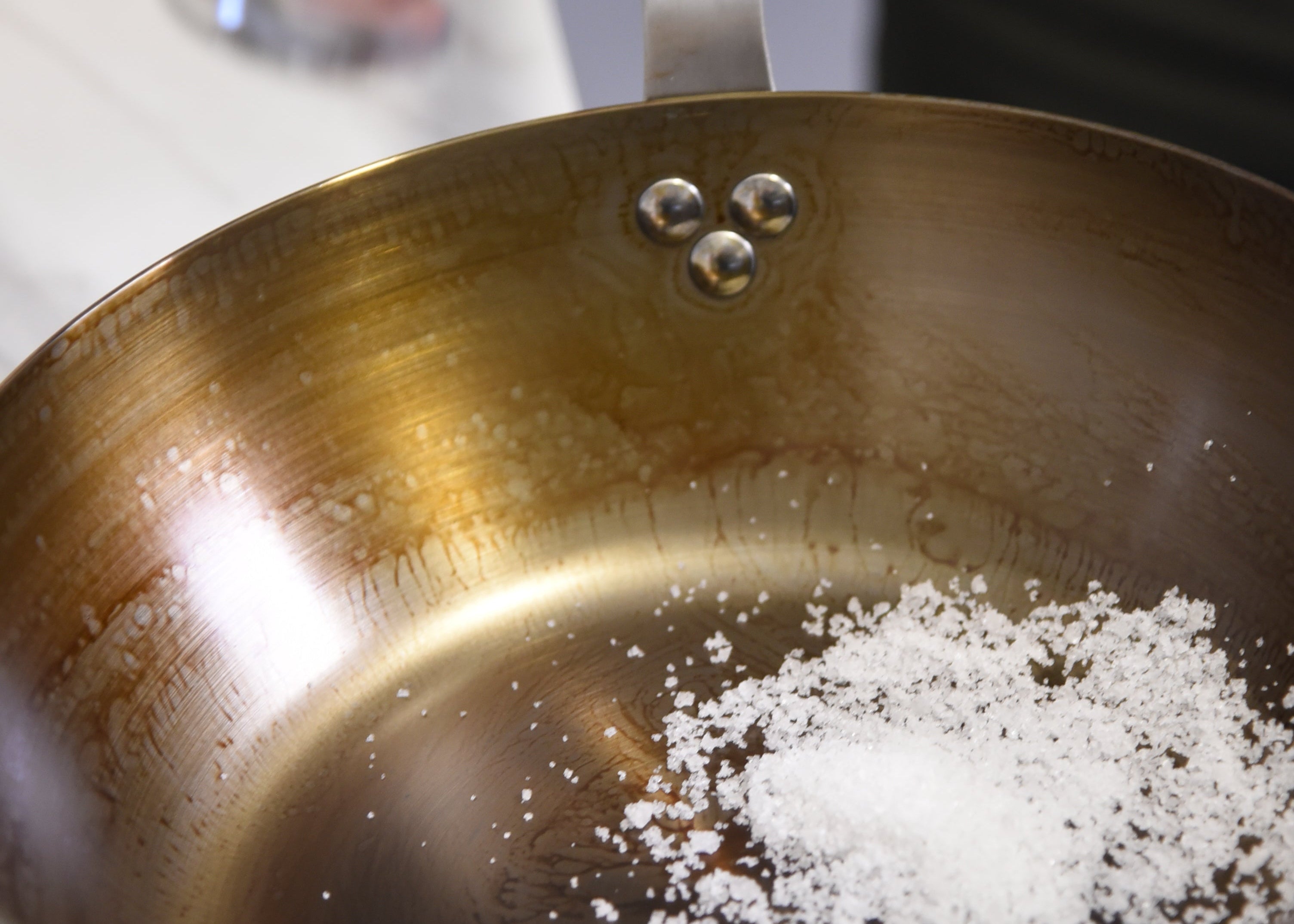
Dopo aver cucinato puoi togliere il grasso extra che si è formato mettendo del sale grosso da cucina e strofinando con della carta assorbente. Poi ripassare olio.
STAGIONATURA
1. Cos'è la stagionatura e perché è tutto
Le Basi
La stagionatura è il processo con cui strati sottilissimi di olio vengono polimerizzati sulla superficie del ferro ad alta temperatura, formando un rivestimento naturale duro, liscio e antiaderente.
Di cosa si tratta davvero
Non è una verniciatura. Non è un trattamento chimico. È fisica e chimica elementare: l'olio si ossida e si trasforma in una resina solida che si lega al metallo. Ogni volta che cucini su una padella in ferro ben stagionata, aggiungi un nuovo strato microscopico a questo rivestimento. La padella migliora con l'uso — letteralmente.
Cosa otteniamo?
Questo è il motivo per cui una padella in ferro trattata bene:
- diventa sempre più antiaderente nel tempo
- non rilascia sostanze chimiche nel cibo
- dura decenni
Perchè scegliere il ferro
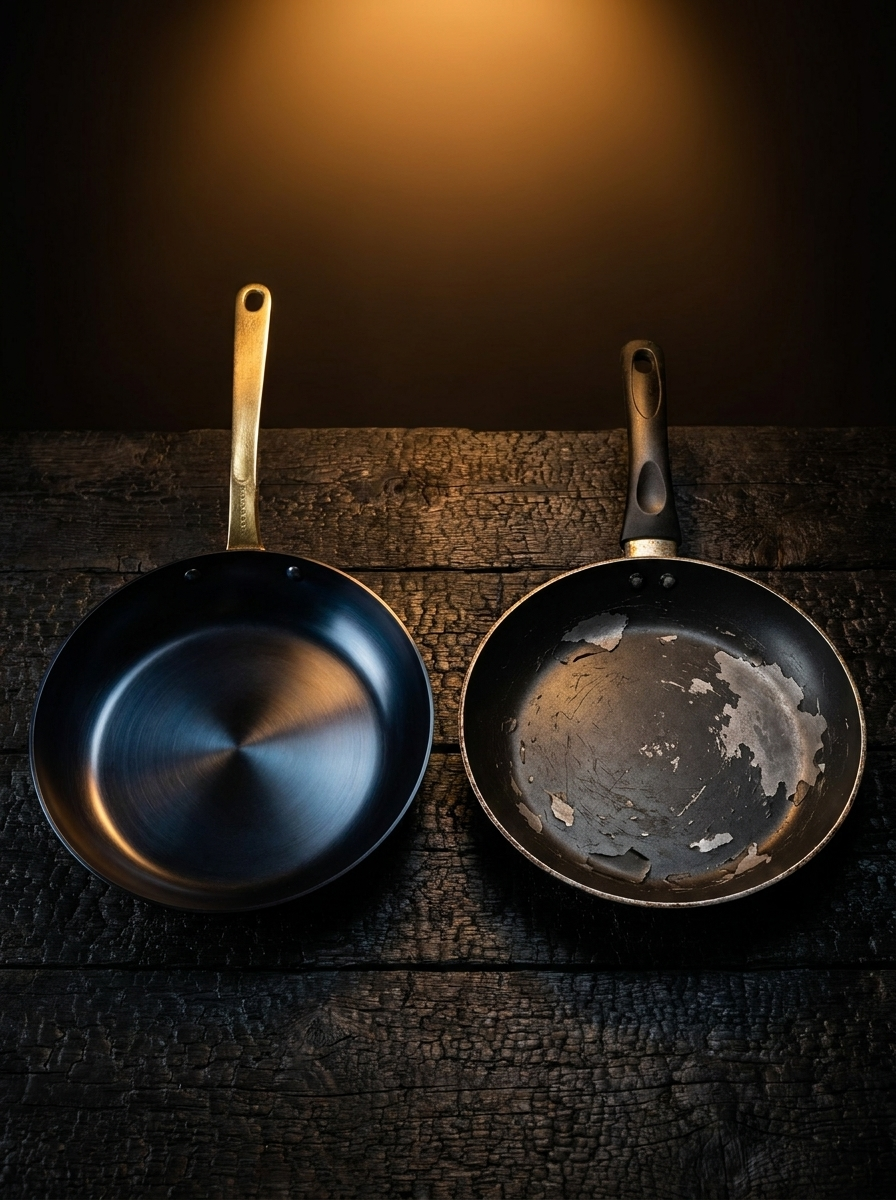
Una padella antiaderente tradizionale, invece, funziona al contrario: con l'uso si degrada, si graffia, e dopo qualche anno va sostituita.

LAVAGGIO
La pulizia iniziale
Le padelle in ferro nuove sono spesso trattate con un leggero strato protettivo antiruggine per il trasporto. Va rimosso prima di iniziare.

AD ALTA TEMPERATURA
La stagionatura
Hai due metodi a disposizione: sul fuoco o in forno. Il forno garantisce una stagionatura più uniforme; il fuoco è più rapido e intuitivo. Per il primo utilizzo, il forno è il metodo consigliato.

COSA UTILIZZO?
L'olio giusto:
preferisci oli con alto punto di fumo, che polimerizza meglio. Olio di semi di lino (il migliore in assoluto), olio di girasole, olio di semi. L'olio d'oliva funziona ma non è ottimale per la stagionatura iniziale.
Perchè lo scelgo?
FERRO VS ANTIADERENTE
Rivestimento naturale: strato antiaderente ottenuto tramite stagionatura (olio polimerizzato), senza sostanze chimiche.
Migliora con l'uso: ogni cottura rinforza lo strato antiaderente. Con il tempo diventa sempre più performante.
Sicurezza alimentare: nessun rilascio chimico nel cibo, nemmeno ad alte temperature.
Durata: decenni o più, se curata correttamente.
Alte temperature: regge qualsiasi calore senza limitazioni.
Manutenzione: richiede asciugatura e oliatura dopo ogni uso — gesti semplici che diventano abitudine.
Rivestimento chimico: basato su PTFE/Teflon o ceramica, applicato industrialmente.
Si degrada nel tempo: l'uso continuo graffia e consuma il coating, riducendo le prestazioni.
Rischi se danneggiata: un rivestimento graffiato o surriscaldato può rilasciare sostanze nocive nel cibo.
Durata limitata: va solitamente sostituita ogni 3–5 anni.
Temperatura massima: il PTFE inizia a degradarsi oltre i 260°C — incompatibile con il fuoco vivace.
Manutenzione minima: più semplice da gestire quotidianamente, ma non dura.

RUGGINE
Come prevenirla e come rimediare
l ferro naturale arrugginisce se esposto all'umidità senza protezione. Ma la ruggine non è la fine: è un problema risolvibile.
Prevenzione:
- Non lasciare mai la padella bagnata
- Asciuga sempre dopo il lavaggio
- Conserva in un luogo asciutto
- Il sottile strato d'olio post-utilizzo è la tua protezione principale
Se compare la ruggine:
- Strofina con sale grosso o paglietta di acciaio finché la ruggine è rimossa
- Lava, asciuga completamente
- Ripeti la stagionatura da capo
Una padella arrugginita non è da buttare. È solo da ristrutturare.
BeSteel